
Table of Contents
AI SaaS pricing is the single biggest revenue lever moving in 2026. The 43% of SaaS companies that switched from pure-seat plans to hybrid models are now growing revenue 38% faster than peers still tied to login counts, according to recent BetterCloud SaaS industry research. The gap is widening every quarter. This guide breaks down why pure-seat pricing broke under AI workloads, what the new hybrid model actually looks like, and how SaaS founders can migrate without losing the customers they already won.
Why pure-seat SaaS pricing broke under AI
Pure-seat pricing assumed every user generated roughly the same marginal cost. That assumption held for a decade. AI broke it in eighteen months.
In a seat-priced product, the company captures revenue per login. Compute, storage, and bandwidth were small enough that one heavy user did not move gross margin. As a result, founders could price simply and forecast confidently for years at a time.
However, AI changes the cost curve. Every agent run, model call, and vector search adds variable cost that scales with usage, not with headcount. One power user inside a ten-seat team can consume more inference than a two-hundred-seat company that barely touches the AI tab. When cost scales with usage but price scales with logins, gross margin compresses on the wrong side.
Furthermore, buyers feel the mismatch too. A team paying flat seat fees does not value the AI features at the price quoted, because they cannot tie spend to outcomes. The renewal conversation becomes a discount conversation. The expansion conversation never happens.
What AI SaaS pricing looks like in 2026
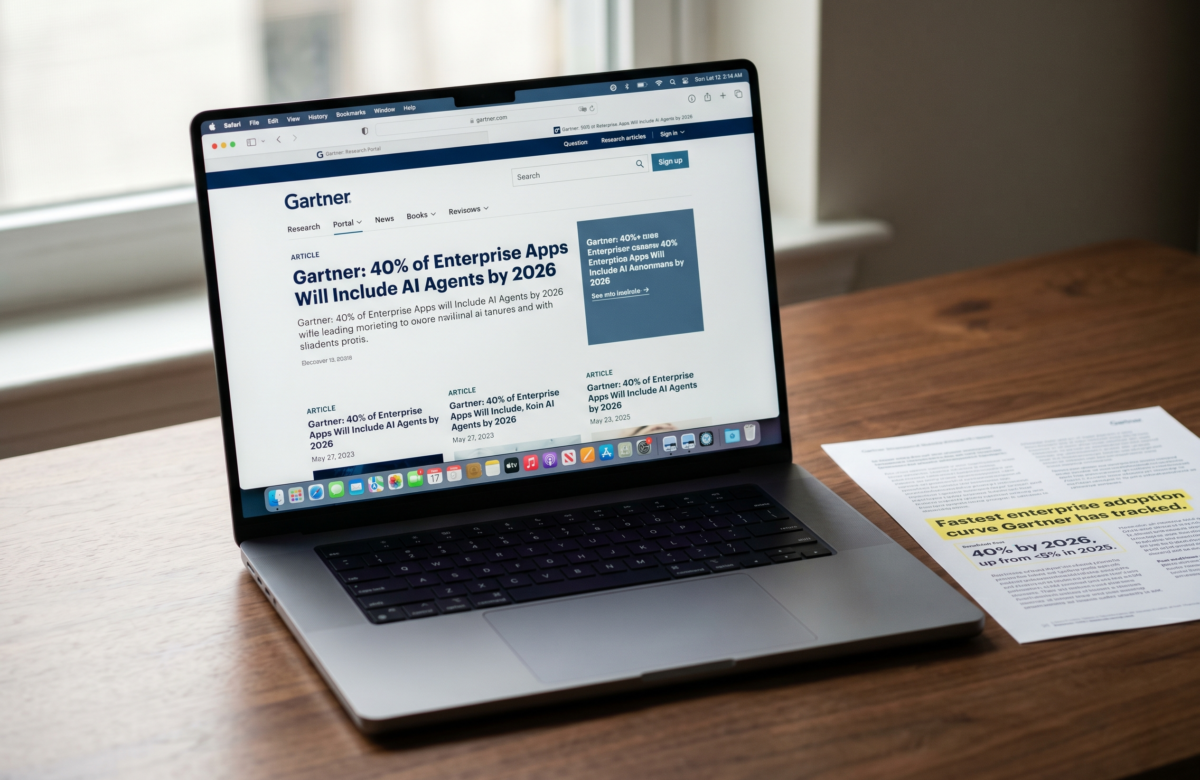
The shift is already measurable. According to SaaS Mag PLG research for 2026, 43% of SaaS companies now use hybrid pricing combining seats, usage, and outcome-based components. That share is projected to reach 61% by the end of 2026. The hybrid cohort reports 38% higher revenue growth than pure-subscription peers.
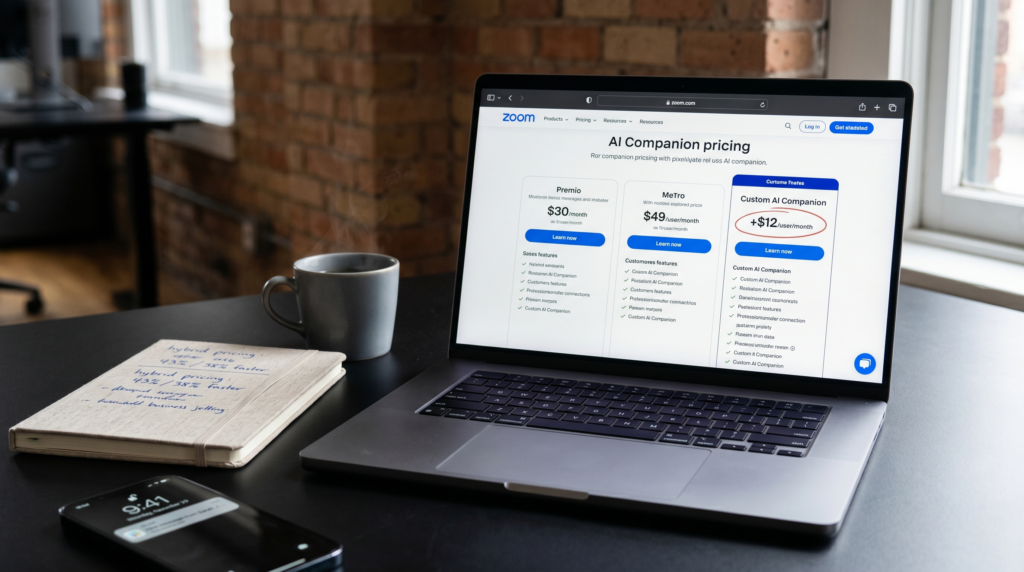
In addition, the pattern is consistent across leaders. Zoom raised the price of AI Companion and added a Custom AI tier at twelve dollars per user per month above the standard bundle, visible on the official Zoom AI Companion pricing page. Algolia layered generative AI add-ons on top of its core search subscription. Triple Whale introduced AI Credits that customers consume as they run analyses.
These are not isolated bets. They are the same playbook executed in different categories. A base seat tier protects self-serve entry. A metered AI line grows with adoption. Visible usage signals inside the product prompt upgrades before the renewal call.
The four-layer hybrid model for AI SaaS pricing
Furthermore, the winning structure breaks into four layers, each serving a different buyer behavior.
- Layer 1: Base seat tier. Keep a low entry price per user so self-serve buyers can start without finance approval. This is the foothold that makes everything else possible.
- Layer 2: Metered AI line. Charge per agent run, per output, per minute of inference, or per outcome. The pricing unit should match what the buyer actually values, not what is easiest to bill.
- Layer 3: Outcome guarantees on premium tiers. For larger customers, offer a higher-priced bundle tied to a measurable result like qualified meetings booked, tickets resolved, or hours saved. This shifts the conversation from cost to ROI.
- Layer 4: In-product usage transparency. Show buyers how much AI they consume, how it compares to peers in their tier, and what the next tier would unlock. Expansion becomes buyer-led, not seller-led.
For example, a B2B analytics SaaS could keep a base of twenty dollars per seat, add a metered line at five cents per AI query, and offer a five-thousand-dollar monthly outcome tier that guarantees a fixed number of automated reports delivered. Each layer attracts a different buyer and each layer compounds the others.
Real SaaS examples shipping in 2026
Zoom moved AI Companion from a free bundled add-on into a structured offer. The standard Workplace plan still includes basic AI Companion. The Custom AI Companion costs twelve dollars per user per month on top. As a result, Zoom captures premium AI revenue without forcing the whole base into a higher tier.
Algolia now sells generative AI features as paid add-ons above the search subscription. Customers self-select into the AI tier when their search workload starts to benefit from generation, not when they sign up. The conversion is value-triggered, not sales-triggered.
Triple Whale introduced AI Credits as a metered consumption unit. Customers buy credits separately from the core analytics subscription. Heavy users see their credit burn rate inside the dashboard, which drives upsell conversations the customer initiates.
Therefore, the consistent thread across these moves is that AI is priced as a separate dimension of the contract. Seats fund the foothold. AI funds the expansion. The two compound rather than cannibalize each other.
How to migrate AI SaaS pricing without losing customers
In contrast to a full re-plan, the best operators run staged migrations across two quarters.
- Grandfather existing customers on their current plan for a defined window of 90 to 180 days. Communicate the new structure transparently and show each account what its bill would look like under both models.
- Default new customers into the hybrid model from day one. New revenue immediately reflects the new economics, and the team builds confidence with the new pricing logic.
- Offer the metered AI line as an optional upgrade for existing seats. Customers who opt in self-qualify as expansion candidates worth a deeper conversation.
- Sunset the legacy plan six months later with clear notice and a migration credit. Most customers will already have moved voluntarily because they can see their own usage data.
As a result, churn stays low, expansion revenue rises, and the gross margin gap closes within a single fiscal year. The teams that try to switch every account at once are the ones that lose customers in the transition.
The takeaway on AI SaaS pricing
Consequently, AI SaaS pricing is no longer a once-a-year exercise. It is a product surface that should be redesigned with the same rigor as an onboarding flow. Founders who treat pricing as product, expose usage to buyers, and decouple AI value from seat counts will outpace the 57% still locked into pure-subscription thinking.
If you are repricing your SaaS this quarter, the question is not how high to price AI. The question is which dimension of customer value you want revenue to track.
For founders working through this shift, the Lumeneze GTM systems framework is built around pricing-as-product redesign for early-to-growth SaaS. Book a fifteen-minute working session to map your AI SaaS pricing migration at calendly.com/ashikurrahaman/15min.