

Table of Contents
AI agent governance is now the deciding factor between an automation pilot that ships and one that gets quietly cancelled. The infrastructure question closed in April 2026. Three platform releases inside thirty days made long-running agents cheap, accessible, and production-grade. The economics question closed with them. What remains is governance, and that is where most teams will lose the next eighteen months.
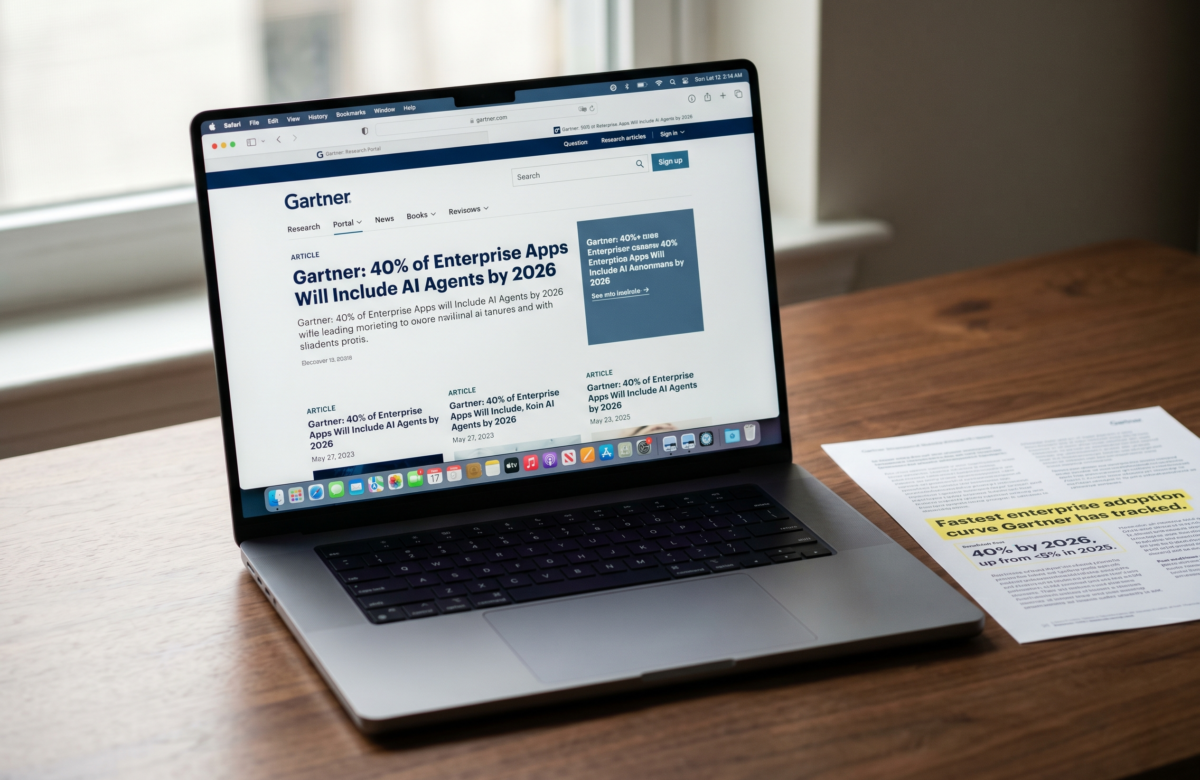
Furthermore, Gartner projects 40 percent of enterprise applications will feature task-specific AI agents by the end of 2026, up from less than 5 percent in 2025. The same Gartner research projects 40 percent of agentic AI projects will be cancelled by 2027. Not because of model quality. Because of architecture.
Why AI Agent Governance Is the 2026 Bottleneck
For the last three years, every conversation about AI automation centered on one question: which model do I use? That question is now mostly settled. Frontier models converged on similar capabilities for the workloads most companies actually run. The bottleneck moved.
In contrast, the new bottleneck is operational. Once an agent has access to a calendar, a CRM, an inbox, and a budget, the failure modes shift. The risk is no longer a wrong answer. The risk is an unauthorized action, a runaway loop, an unbounded cost line, or a compliance failure with no audit trail.
As a result, AI agent governance has stopped being a checkbox at the end of an automation project. It has become the architecture itself. Teams that treat governance as the last 10 percent of work are the teams whose agents get paused after the first expensive mistake.
The Agent Infrastructure Layer Is Now Solved
In addition, three April 2026 releases collapsed the cost and complexity of running long-lived agents.
Anthropic launched Claude Managed Agents at 0.08 dollars per session-hour, billed to the millisecond, with idle time free. The harness, the sandboxing, the long-running session state, the permission scoping, and the tracing now ship as a managed service.
Furthermore, Google announced the Gemini Enterprise Agent Platform with Workspace Studio, a no-code surface that lets a business user describe an agent in plain English and deploy it across Gmail, Docs, Sheets, Drive, Meet, and Chat.
Nvidia opened its Agent Toolkit at GTC 2026, with Adobe, Salesforce, and SAP among the first seventeen adopters. The vendor stack is no longer a moat.
Therefore, anyone can deploy a production-grade agent this week. The economics are open. The infrastructure is open. The differentiator has moved one layer up.
The 5-Layer AI Agent Governance Architecture
The teams that survive the 2027 cancellation wave will run agents with the same governance maturity as a managed Salesforce instance. That maturity has five layers, and each one fails distinctly when it is missing.
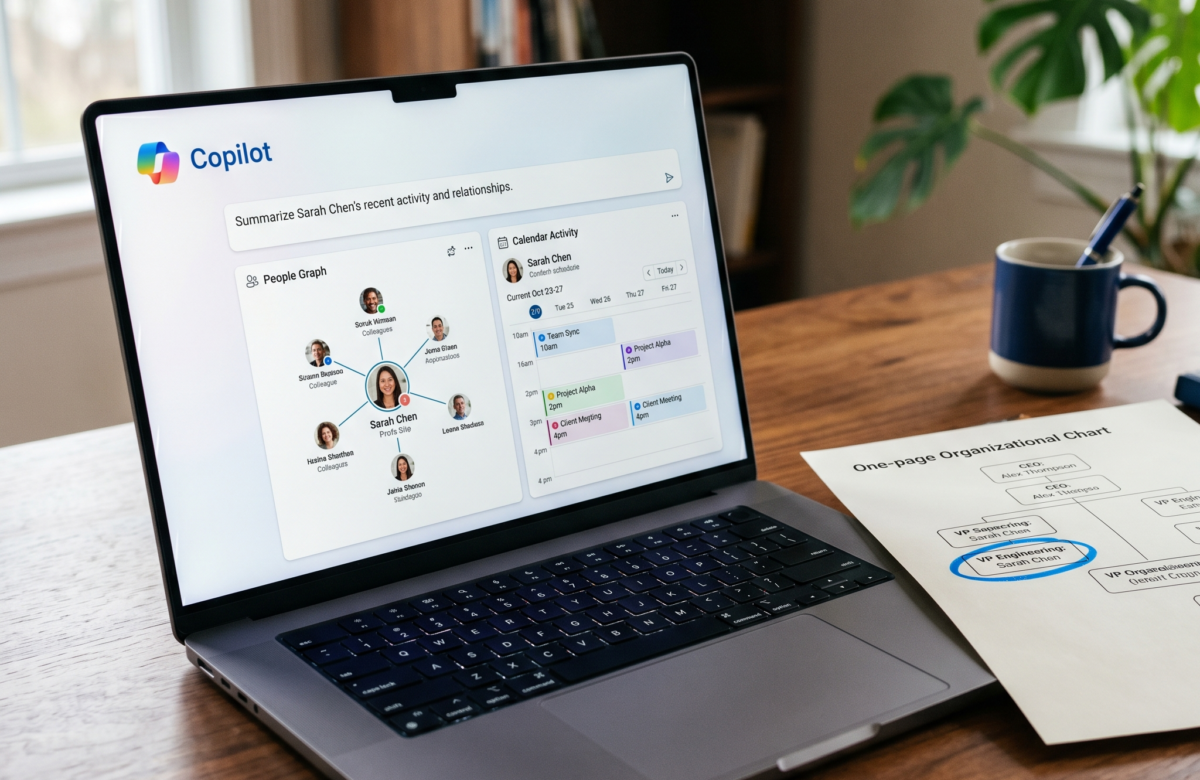
Layer 1: Identity. Each agent gets a verifiable, named identity, not a shared service account or a recycled API key. When the agent acts, the action is attributable to a specific software entity with a known owner. Without identity, every audit and every incident review starts from zero.
Layer 2: Permissions. Each agent is scoped to a single domain or workflow. The customer support triage agent does not have access to billing. The pipeline-building agent does not have access to deal close fields. Scope is the easiest layer to add and the most expensive one to retrofit.
Layer 3: Audit. Every action is logged in a system that survives platform migration. The log captures inputs, tool calls, outputs, and the human decisions that approved the run. When compliance asks how the agent reached its conclusion, the answer should take minutes, not weeks.
Layer 4: Cost. Each agent has a per-run token budget, a per-day session-hour ceiling, and a kill switch. Without cost ceilings, a single tool loop can run a 5,000 dollar bill overnight. The kill switch is not optional. It is the cheapest insurance in the stack.
Layer 5: Decision rights. Each agent has a documented boundary between autonomous action and human approval. The boundary is not based on model confidence. It is based on the reversibility and the financial impact of the action. Sending an email is reversible. Refunding a customer is not.
A 30-Day Path From Pilot to Production
For example, an early-stage B2B team with a single agent in pilot can sequence the five layers across thirty days without rebuilding the underlying workflow. Week one is identity and permissions. Provision a named identity for the agent in your IAM provider. Scope its access tokens to only the systems it actually touches.
Furthermore, week two is audit. Route every tool call and every model output through a structured log store with a retention policy your compliance officer signed off on. Avoid storing logs only inside the agent platform you are renting from.
In addition, week three is cost. Set a per-run budget. Set a per-day session-hour ceiling. Wire a kill switch any operator can fire from a single command. Test it. Most teams discover their kill switch does not actually stop the agent until they try.
Therefore, week four is decision rights. Map every action the agent can take to a category: autonomous, requires notification, requires approval. Document who the human approver is for each non-autonomous category, and what the response time SLA looks like.
What This Means for B2B Founders Right Now
Consequently, the question for any B2B founder running an agent in production is not which model is fastest. It is whether the agent can survive the next compliance review, the next platform change, and the next cost spike.
However, the teams that build all five governance layers before scale will compound leverage quietly. The teams that skip them will appear in the 40 percent cancellation cohort Gartner is already counting. AI agent governance is no longer a back-office concern. It is the determining factor of whether the agent is still running in 2027.
If you are building agent infrastructure inside an early-stage B2B company and want a second pair of eyes on which of the five layers is weakest, Lumeneze partners with founders on the architecture before the cost line gets ugly. Book a 15-minute intro at calendly.com/ashikurrahaman/quick-intro.