
Table of Contents
AI GTM strategy is getting louder every quarter, but pipeline numbers are not matching the noise. On April 21, 2026, Demandbase expanded its Agency and Service Provider Partner Program and launched the Premier+ Service Delivery Partner Tier. The quiet admission inside that press release matters more than the tier itself. Enterprises with agentic platforms still cannot ship pipeline without operators who know how to run them.
On the same day, Precedence Research announced a GTM-as-a-Service offering. Two announcements, same signal. The AI GTM platform market is commoditizing. The AI GTM operator market is the one actually compounding.
Why AI GTM Strategy Is Hitting A Wall In 2026
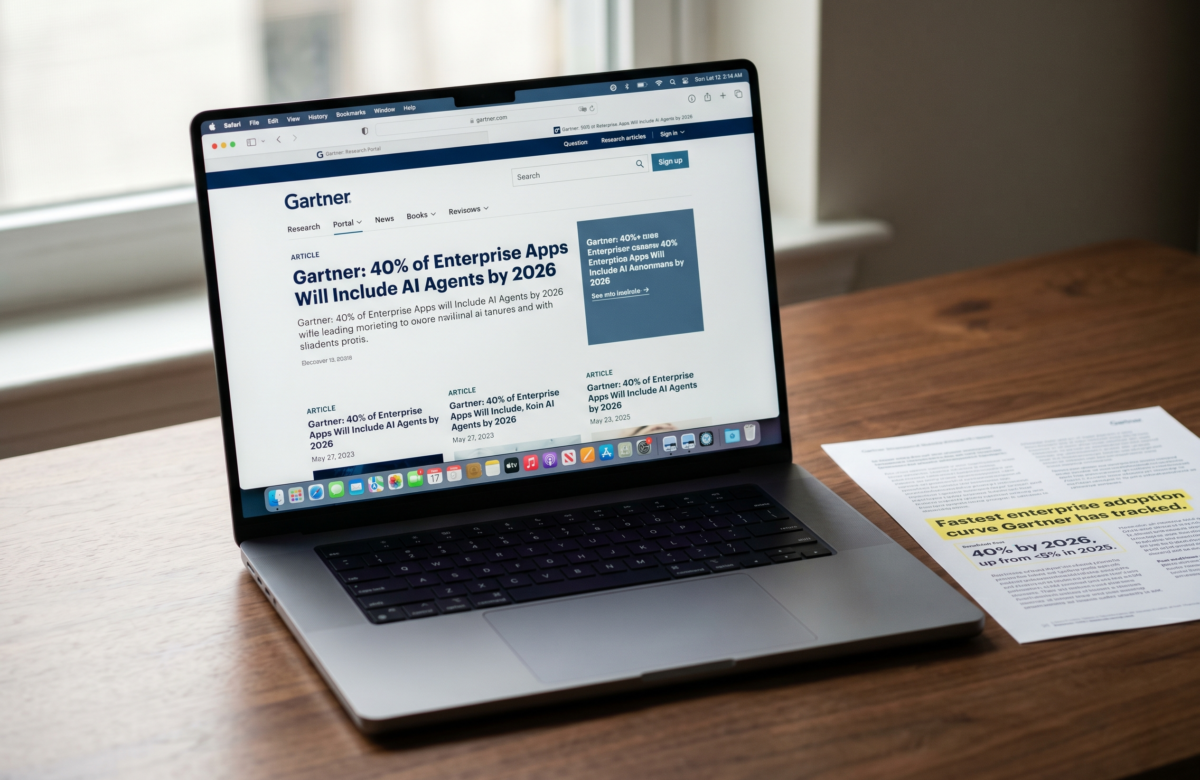
Gartner predicted in June 2025 that over 40 percent of agentic AI projects will be canceled by the end of 2027, citing hype, integration complexity, and unclear business value. The pattern holds across revenue stacks. Teams buy a platform, turn on agents, watch their pipeline stay flat, and then blame the tool.
However, the platform is almost never the problem. In most B2B companies, the AI GTM strategy fails because the workflow underneath the agent is still broken. Lead definitions drift across Sales and Marketing. Scoring logic is frozen from 2023. The ICP is not written down. The agent inherits all of that mess and scales it.
For example, a typical Series B team connects an autonomous SDR agent to a CRM that has three different definitions of a qualified account. The agent sends outbound at volume, booking rates stay under one percent, and someone on the RevOps team gets blamed. The real cause sits upstream of the model.
What Demandbase Just Admitted About AI GTM
The Premier+ Service Delivery Partner Tier announcement from Demandbase frames the move as helping customers move faster from insight to action. Read between the lines. The vendor is telling the market that platform plus agents is not enough. Customers need certified operators who deliver onboarding, strategy, analytics, and managed execution on top of the software.
In contrast to the 2023 playbook, where vendors optimized for self-serve onboarding, the 2026 playbook is explicit. Partners who can operationalize AI across revenue teams now sit at a premium tier. Marketbridge, the inaugural Premier+ partner, served as a beta user for Demandbase AI and brought firsthand experience in running AI workflows inside real revenue orgs.
Therefore, the strategic lesson is simple. The best AI GTM strategy in 2026 is not defined by which platform you pick. It is defined by how much operational judgment sits between your raw data and your agents.
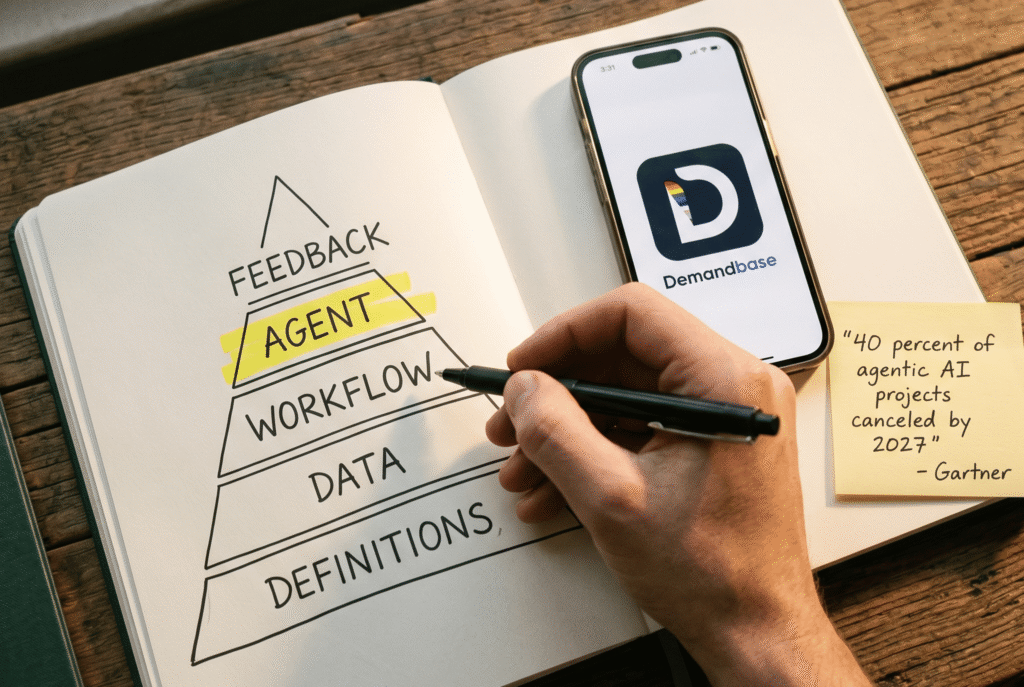
The 5-Layer AI GTM Execution Framework
Most AI GTM stacks fail because teams skip layers. The framework below is the audit sequence we use with B2B clients before any agent goes live. It works whether the platform is Demandbase, Clay, Apollo, or an internal build.
- Layer 1, Definitions. One written ICP. One scoring rubric. One lead-to-opportunity handoff contract. If Sales and Marketing cannot recite them from memory, the agent will scale the confusion.
- Layer 2, Data. One source of truth for accounts, contacts, and events. Intent data should enrich a clean schema, not paper over a dirty one.
- Layer 3, Workflow. The manual version of the workflow runs end-to-end in under a week without an agent. If humans cannot close the loop, neither can the model.
- Layer 4, Agent. One narrow job per agent. One measurable output. One visible failure mode. No stacked agents layered over a broken step in Layer 3.
- Layer 5, Feedback. Every agent run produces a logged outcome, a human spot check, and a reason code. This is the layer where the system actually learns.
Furthermore, most vendors sell Layer 4 and leave Layers 1 through 3 to the buyer. That is the gap partners like Marketbridge now fill. Our Lumeneze team runs the same sequence on every engagement, because AI is only as sharp as the definitions it inherits.
Before And After: The Same Platform, Two Outcomes
Consider two Series B SaaS teams in the same category. Both sign a six-figure contract for an AI GTM platform in the same quarter. Both turn on the same outbound agent.
Team A skips the framework. The ICP lives in three different slide decks. The CRM has overlapping account records. The outbound agent pushes 18,000 emails in the first month. Meeting bookings stay at 0.4 percent. Churn on the platform is pre-written into the renewal.
Team B runs Layer 1 through Layer 3 before the agent is even enabled. They write a one-page ICP. They merge account records down to a clean primary. They map the sales workflow manually and find that two handoff steps were silently dropping 30 percent of inbound leads. By the time the agent turns on, it is pointed at a clean surface. Meeting bookings land near 2.1 percent. The same software, used differently, produces a very different AI GTM strategy result.
Consequently, the unit of value in AI GTM is no longer the platform. It is the operating system around the platform.
How To Audit Your AI GTM Stack This Week
Run a five-question audit before you sign another AI GTM vendor or renew an existing one. The audit takes one hour. It surfaces the issues that kill 40 percent of agentic projects.
- Can three people on your revenue team write the same one-sentence ICP without checking a doc?
- Does every account in your CRM have one canonical record with an owner?
- Can you diagram your current inbound and outbound workflow on a single page?
- Does each active agent have one measurable output and a named owner?
- Do you review agent outputs weekly against a written reason-code list?
In addition, a useful external benchmark is Gartner research on agentic AI, which maps the same failure modes the audit surfaces.
As a result, the AI GTM strategy question for 2026 is not which agent platform to buy. The real question is whether your operating layer is clean enough to let any platform compound. If the answer is no, stop evaluating vendors and fix the layer underneath.
Book a 15-minute call to pressure-test your AI GTM strategy: calendly.com/ashikurrahaman/quick-intro.