

If you are running an early-stage B2B company in 2026, you probably have more tools than you have answers. A CRM feeding into an email sequence. An automation layer connected to enrichment data. Analytics sitting somewhere no one checks consistently. The stack looks complete. But when you ask “what is actually working?”, the room gets quiet.
This is one of the most common GTM problems we see at Lumeneze, and it is almost never a tool problem. It is a sequencing and architecture problem. The signals are there. The intelligence layer to connect them is not.
The Tool Sprawl Trap
Most founders build their GTM stack reactively. A sales leader recommends one tool. A growth hire brings in another. The marketing team adds a third. Each tool solves a specific problem in isolation. After 18 months, you have a sophisticated collection of platforms, each producing data, none of it talking to the others in a way that drives decisions.
This is what we call the tool sprawl trap. You are not lacking data. You are lacking synthesis.
The average early-stage B2B team now runs between 8 and 15 GTM tools. But the number of tools does not correlate with GTM clarity. In fact, the teams with the most tools often have the slowest decision cycles, because they spend more time managing integrations and reconciling outputs than acting on clear signals.
What a Unified GTM System Actually Looks Like
A unified GTM system is not a single platform. It is an architecture that connects the tools you already have into a coherent intelligence layer.
In practice, this means three things:
One source of truth for revenue-relevant signals. Product usage data, deal stage, engagement metrics, and intent signals should flow into one place, structured consistently, so that anyone on the team can see the same picture. This does not require replacing your CRM. It requires connecting your CRM to the signal sources that matter.
AI that synthesises rather than reports. Most teams use AI today to surface raw data: “Here are your top leads” or “Here is this week’s pipeline movement.” That is useful but shallow. A properly structured system uses AI to identify patterns across signal types, flag anomalies, and prioritise actions, not just display numbers.
Decisions grounded in context, not memory. In most early-stage teams, critical GTM decisions depend on whoever did the last audit or exported the most recent spreadsheet. A unified system changes this. When the context is always available and structured, decisions get faster and more consistent, regardless of who is in the room.
The Sequencing Problem
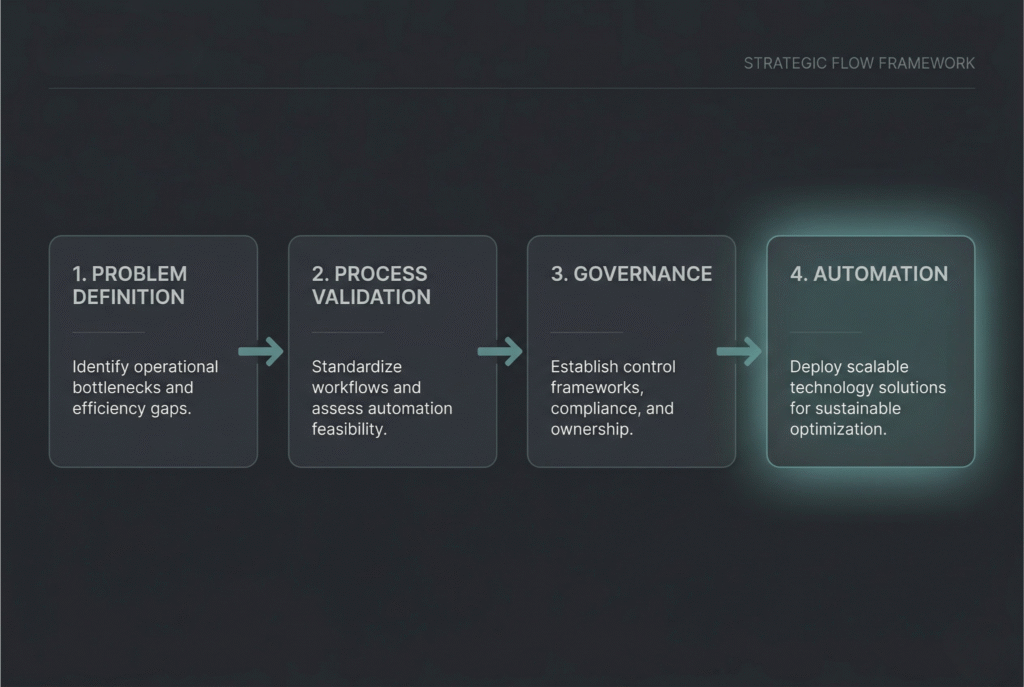
The deeper issue behind GTM tool sprawl is sequencing. Most teams add tools before they have clarity on the strategy the tools are meant to execute. They automate outreach before they have a clear ICP. They build dashboards before they have decided what metrics matter. They add AI before they have a clean data model.
At Lumeneze, we follow a simple rule with every client: automation after strategy. This does not mean delaying tools indefinitely. It means establishing clarity on what you are trying to do, who you are doing it for, and what signals matter before deciding which tools should be producing and connecting those signals.
When the sequencing is right, every tool you add amplifies the system. When the sequencing is wrong, every tool you add adds maintenance overhead and more noise to reconcile.
How to Start Building the Unified Layer
If you are currently running a disconnected GTM stack, here is a practical starting point:
- Audit your signal sources. List every tool currently producing data about customers, leads, or pipeline. Note what it produces and where that data lives.
- Identify your three most important decision signals. These are the three metrics or signals that, if you had them clearly and consistently, would change how you make GTM decisions. For most B2B teams, these are some combination of: activation rate, intent signal, and deal velocity.
- Map those signals to your existing tools. You likely already have the data. The question is whether it is structured and connected in a way that makes it actionable.
- Build one unified view before adding more tools. Use a lightweight layer, whether that is a purpose-built dashboard, a well-structured CRM custom view, or a basic AI summary, to surface those three signals in one place. Make this the daily operational view for your GTM team.
- Only add a new tool when it clearly improves a specific signal. If a new integration does not improve one of your critical signal feeds, it is probably adding overhead rather than value.
The Architecture Advantage
GTM clarity is not a function of how many tools you have. It is a function of how well your signals are connected and synthesised. Early-stage teams that build this architecture intentionally move faster, waste less, and make better product and GTM decisions from the same shared context.
If your stack is growing but your clarity is not, the fix is architecture, not another integration.
At Lumeneze, we help early-stage B2B teams build the product strategy, GTM systems, and automation infrastructure that connects. If this resonates with where your team is right now, let us talk.
Visit lumeneze.com or book a call directly at calendly.com/ashikurrahaman/quick-intro